

Lake County enters fire season with new equipment money, deeper budget worries
On the first day of Wildfire Preparedness Month, Lake County fire leaders stood beside state Sen. Mike McGuire to celebrate $2 million in state money for badly needed firefighting equipment.
The funding will help three local agencies replace or rebuild aging apparatus: two water tenders and Lake County’s only ladder truck.
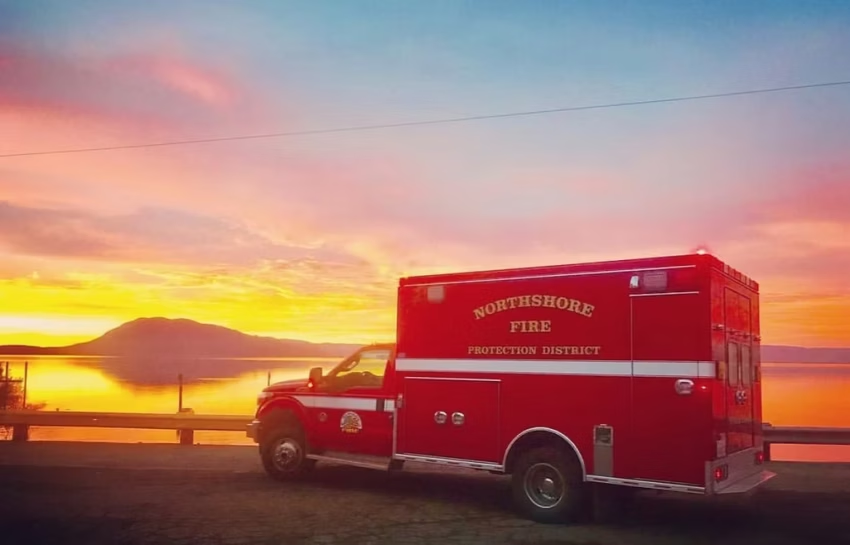
But the announcement also landed as another local fire district, Northshore Fire Protection District, was publicly confronting a grim financial outlook. In Lucerne, district leaders have been weighing deep cuts, shrinking reserves and the possibility that voters may need to approve a new tax measure as soon as 2027 to keep the agency stable.
Together, the two developments point to a larger problem facing one of California’s most fire-scarred counties: even when the state helps pay for trucks, Lake County’s rural fire system still has to find a way to pay for the people, stations and daily operations needed to respond.
Lake County Fire Protection District will receive $560,000 for a new 3,200-gallon water tender, replacing a 29-year-old vehicle. South Lake County Fire Protection District will receive $585,000 for another water tender, replacing a 40-year-old piece of equipment that officials said was heavily used and sometimes would not start. Lakeport Fire District will receive $850,000 to rebuild Truck 5011, the county’s only ladder truck.
For rural fire agencies, water tenders are not specialty equipment. They are often central to the first response.
Much of Lake County lies outside areas with reliable hydrant access. When a fire starts in a remote neighborhood, on a ranch road or along a highway, tenders can determine how quickly crews can bring enough water to fight it.
The ladder truck fills a different but equally important role. Lakeport officials said replacing it with a new truck would cost about $2.5 million. The rebuild is expected to return the truck to service early next year.
The state money comes as fire season preparations accelerate across the region. Cal Fire’s Sonoma-Lake-Napa Unit began requiring residential burn permits May 1 in Lake, Sonoma, Napa, Solano, Yolo and Colusa counties.
For Lake County, the timing carries particular weight. Since 2015, wildfires have burned large portions of the county and destroyed more than 1,800 homes, according to county wildfire planning documents. Some estimates put the county’s burned land mass over the past decade at more than 60%.
Those losses are still shaping daily life: evacuation planning, insurance availability, defensible-space work and the financial pressures on small fire agencies.
That is where Northshore Fire’s situation complicates the celebratory funding announcement.
Northshore, which serves communities along the north shore of Clear Lake, was not among the three agencies receiving the new $2 million allocation. But its financial troubles illustrate the fragility of the broader local system.
At a special board meeting last week, Northshore officials reviewed a draft budget that had already been cut by about $1.5 million from the current fiscal year. Even after those reductions, the district still faced a large revenue gap and the prospect of drawing down already thin reserves.
Financial analyst Miasha Rivas told the board the district could have roughly “one fiscal year and three months” of money left if conditions do not improve. District leaders discussed the likelihood of a ballot measure by March 2027.
Lake County’s fire agencies do not operate in isolation. During major fires, crashes, medical calls and other emergencies, districts rely on mutual aid. When one district struggles financially, the pressure can spread to neighbors that are already stretched.
That makes the new state funding both significant and incomplete. The money addresses urgent equipment needs. It does not solve the operating-budget challenges that determine staffing, station coverage, training and long-term readiness.
The policy question now facing Lake County leaders is whether one-time state allocations can keep pace with the cost of protecting rural communities where fire risk is high, tax bases are limited and equipment is expensive to replace.
For residents, the issue is practical. A new water tender may help crews reach a fire with enough water. A rebuilt ladder truck may keep a countywide resource alive. But if local districts cannot afford the staffing and reserves to keep the system stable, Lake County’s fire risk will remain as much a budget problem as a wildfire problem.