
Three adults are in the hospital after eating wild mushrooms picked in the hills above Deer Park, and Napa County’s top public health officer is asking everyone in the region to put down the basket until further notice.
Dr. Christine Wu, Napa County’s Public Health Officer and a deputy director at the county’s Health and Human Services agency, said the three cases came out of a small triangle of ground bounded by Deer Park Road, Fawn Road, and Silverado Trail — wet, oak-shaded terrain on the north-facing flank of Howell Mountain that has been pushing up a heavy mushroom flush since the last round of storms. All three patients are non-residents, the county said in a Tuesday-evening release, which means whoever picked the mushrooms either came up for the weekend or was visiting someone who lives in the area.
The Deer Park hospitalizations are part of a much uglier statewide pattern. Since November 18, 2025, California has logged 47 wild-mushroom poisoning cases and four deaths, the county said, citing state public health figures. That is a fast pace for the back end of a mushroom season, and it tracks with the long, wet spring the North Bay has had — exactly the conditions the worst of the local fungi want.
The species the county didn’t name
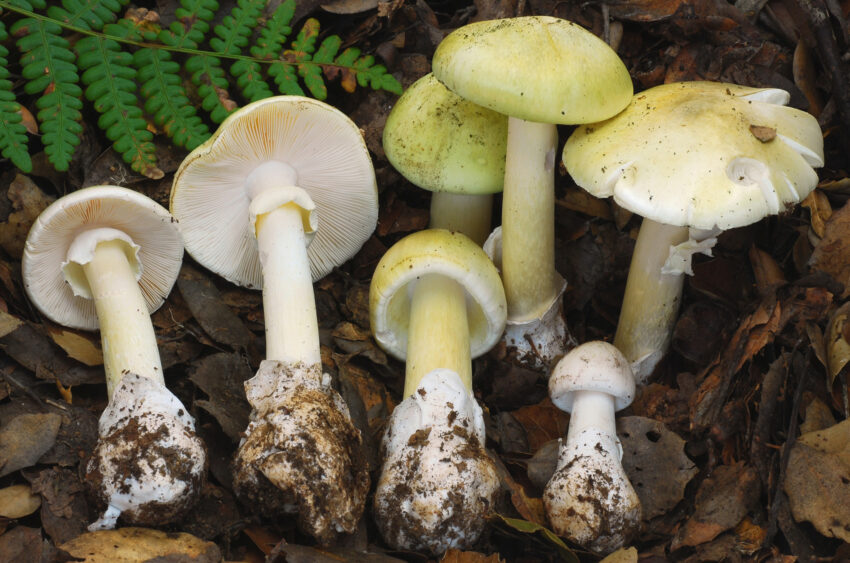
The county did not identify the mushroom involved in the three local cases. But the symptom pattern Dr. Wu’s office described — nothing for six to 24 hours, then sudden and severe illness — is consistent with the delayed-onset toxicity that has made the death cap (Amanita phalloides) and the destroying angel (Amanita ocreata) the deadliest mushrooms in California’s woods. Both are widespread in the Mayacamas and the Vacas. Both grow under oaks. And both have killed people who thought they were picking something else.
Boiling, drying, freezing, and cooking do not break down the toxins, Wu said. By the time a patient feels sick, the liver damage is often already underway.
“The best way to stay safe is to not eat wild mushrooms,” she said in the release.
What to do if you, your kid, or your dinner guest ate one
If anyone in your house has eaten a wild mushroom and starts feeling off — cramping, vomiting, diarrhea, jaundice, confusion — Wu’s office wants you on the phone with California Poison Control before you head anywhere else. The hotline is 1-800-222-1222, runs 24 hours a day, and operates in more than 200 languages. They will tell you whether to ride it out, go to urgent care, or get to an emergency room. They can also call ahead to the ER you’re heading to.
A few practical notes that the release did not spell out but that are worth knowing if you live, hike, or host visitors here:
- “I trusted the person who picked them” is not a defense. Amanitas mimic several edible species closely enough that experienced foragers have been hospitalized from their own baskets.
- Children and small dogs reach toxic doses on much less mushroom than an adult. If your dog grabbed something on a walk, call your vet right away rather than waiting to see what happens.
- The dangerous window is the quiet one. People often feel fine for hours, decide they’re in the clear, and then crash. Don’t wait for symptoms to escalate before calling.
What’s still open
Napa Public Health has not closed any trails or posted advisory signs in the Deer Park area, and the county has not said whether any of the three patients have been positively matched to a specific species, or whether their cases are linked to one foraging trip or several. The release did not include condition updates beyond “hospitalized.”
Wine Country Daily has asked the county for the species identification, the current condition of the three patients, and whether public health is doing any additional testing or outreach on Howell Mountain. We’ll update this piece as we hear back.
Until then: rain or no rain, leave the wild ones in the dirt.
—
Source: Napa County Public Health alert, May 12, 2026. California statewide figures cited by Napa County: 47 cases and 4 deaths since November 18, 2025. California Poison Control: 1-800-222-1222.